In Ghana’s Central Region, hidden between tropical forest roads and the echoes of centuries past, lies one of the most sacred and emotionally powerful places in the African diaspora: the Assin Manso Slave River Site.
A historical landmark; a place where history breathes.


Thousands of captured Africans passed through Assin Manso. Shackled, exhausted, traumatized, and stripped of identity, they were marched through this inland transit point toward the Atlantic coast — toward a future they could neither imagine nor escape.
At the heart of the site flows Donkor Nsuo, known today as the “Last Bath” or the Slave River.



Here, enslaved Africans were allowed to bathe one final time on African soil before being branded and forced onward to the coast. It was not an act of compassion. Slave traders wanted captives to appear healthier and stronger before sale and transport across the Atlantic. Yet today, these waters have transformed into something far more powerful: a sacred symbol of remembrance, mourning, survival, and spiritual return.
Visitors to Assin Manso walk barefoot down to the river in silence. The atmosphere is heavy, reflective, and deeply personal. For many descendants of the diaspora, this is not tourism — it is a pilgrimage.
The memorial grounds also contain an Ancestral Graveyard, where the remains of two formerly enslaved Africans were ceremonially returned and reburied from Jamaica and New York. Their return symbolizes the restoration of a broken connection between Africa and its scattered descendants.
Nearby stands the Memorial Wall of Return, where members of the African diaspora inscribe their names after tracing their ancestry and reconnecting with their homeland. Every name on that wall represents a journey interrupted centuries ago — and spiritually resumed today.

Assin Manso is more than a memorial to suffering.
It is a monument to endurance.
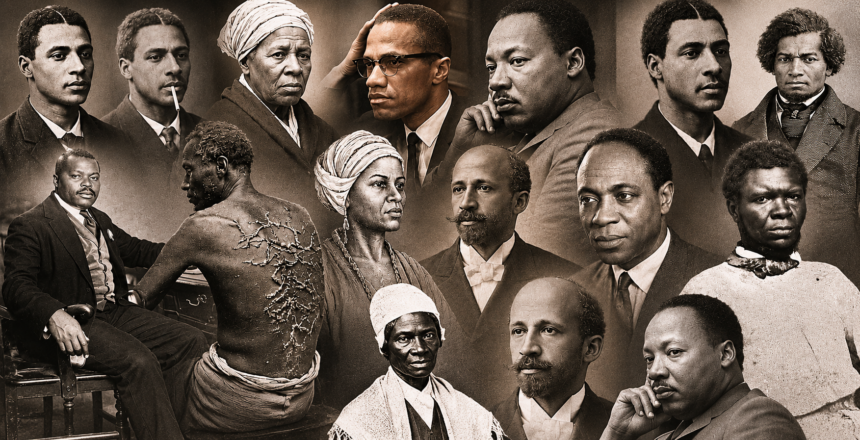
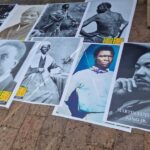
The stories connected to this river live on through generations of resistance and liberation — from Nat Turner and Harriet Tubman to Frederick Douglass, Marcus Garvey, W.E.B. Du Bois, Malcolm X, Martin Luther King Jr., George Padmore, Kwame Nkrumah, and countless others who transformed inherited pain into global movements for freedom, dignity, Pan-Africanism, and justice.
Broos
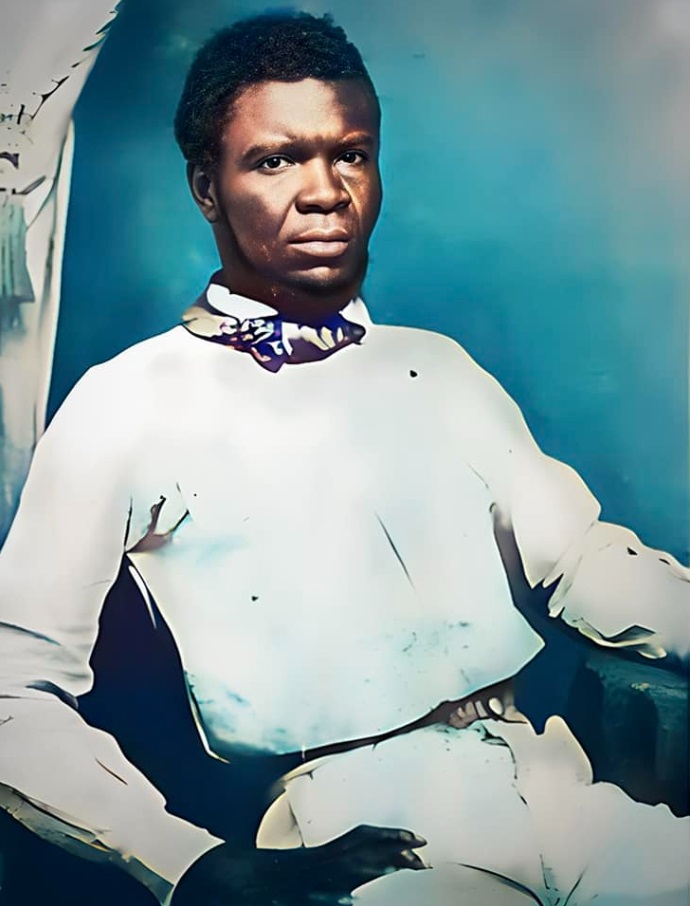
1821–1880 · Suriname
The only Surinamese freedom fighter ever to be photographed — a man who refused to be returned to the plantation, even on the eve of abolition.
Captain Broos was a nineteenth-century Surinamese freedom fighter and leader of the Bakabusi Sama — a name that translates as “the people behind the forest.” This community of Maroons had escaped from the plantations and settled deep in the swamps along the upper reaches of the Surnau Creek, a tributary of the Suriname River. Their territory, also known as Kaaimangrasi, was virtually inaccessible to armed colonists searching for them. The first Maroons had lived there since as early as 1740.
Broos led this community alongside his younger brother Kaliko, born in 1835. The Bakabusi Sama had fought repeatedly against white colonists and plantation owners. A hundred years before the abolition of slavery, the Aukaner Maroons had already concluded the Peace Treaty of 1760 with the colonial government, securing their freedom and independence — a precedent that shaped the world Broos was born into. In 1772, part of the Bakabusi Sama joined the Boni Maroons, deepening the network of free communities in the Surinamese interior.
The most dramatic episode of Broos’s life came just before the official abolition of slavery on 1 July 1863. The colonial government dispatched a patrol with orders to forcibly return the Brooskampers to the plantations — not out of concern for their welfare, but so that their former owners could claim the government compensation paid per enslaved person. Broos and his community resisted. The patrol failed and withdrew to the plantation Rac à Rac. It was an act of defiance at the final hour, against a system already on its last legs.
Shortly before abolition, Broos travelled to Paramaribo to negotiate a peace agreement with Governor-General Van Lansberge. It was there that he received his official title of Captain and was granted Rorac — a long-abandoned sugar plantation — as the permanent settlement of his people. After emancipation, the Brooskampers settled in Rorac for good, among them Broos’s brother Kaliko, his sister Mandrijntje, his mother Ma Uwa, and his grandmother Ma Amba — who had been born in Africa, in what is now Ghana. Three families descend from Broos’s camp: Babel, Landveld, and Deekman, the latter carrying the most direct line of descent. Broos remains the only Surinamese freedom fighter of whom a photograph survives.
Emmanuel – 19th century · US
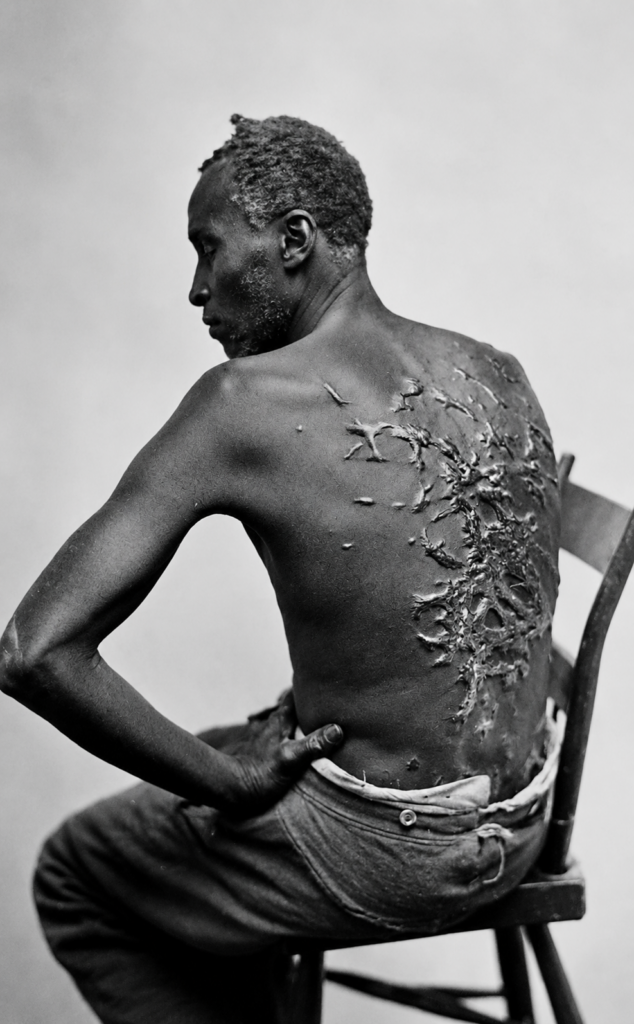
The portrait of Emmanuel is one of the most haunting documents in the history of American slavery. It shows a man photographed from behind, his back covered in deep, winding scars — the result of years of whippings inflicted upon him for his refusal to fully submit to the system that held him captive. His name was Emmanuel, and while little is known about the arc of his life, his back became a symbol for millions.
The photograph was taken in 1863 in Baton Rouge, Louisiana, by Federal soldiers after Emmanuel’s liberation. It was reproduced as an illustration in Harper’s Weekly — one of the most widely read magazines of the time — and subsequently spread across the North as postcards and pamphlets. For many who had never witnessed the plantations of the South, this was the first irrefutable visual proof of what slavery truly meant for the human body.
Abolitionists deployed his portrait strategically: it demolished the narrative of slaveholders who described slavery as a civilised institution. Emmanuel himself, after his liberation, was incorporated into the Union Army as a soldier. What became of him afterward remains largely undocumented — a fate he shares with the vast majority of people whose names were never written down. But his back tells a story that requires no words. His portrait hangs today as a silent accusation and as a tribute to all who remained nameless.
Queen Nanny
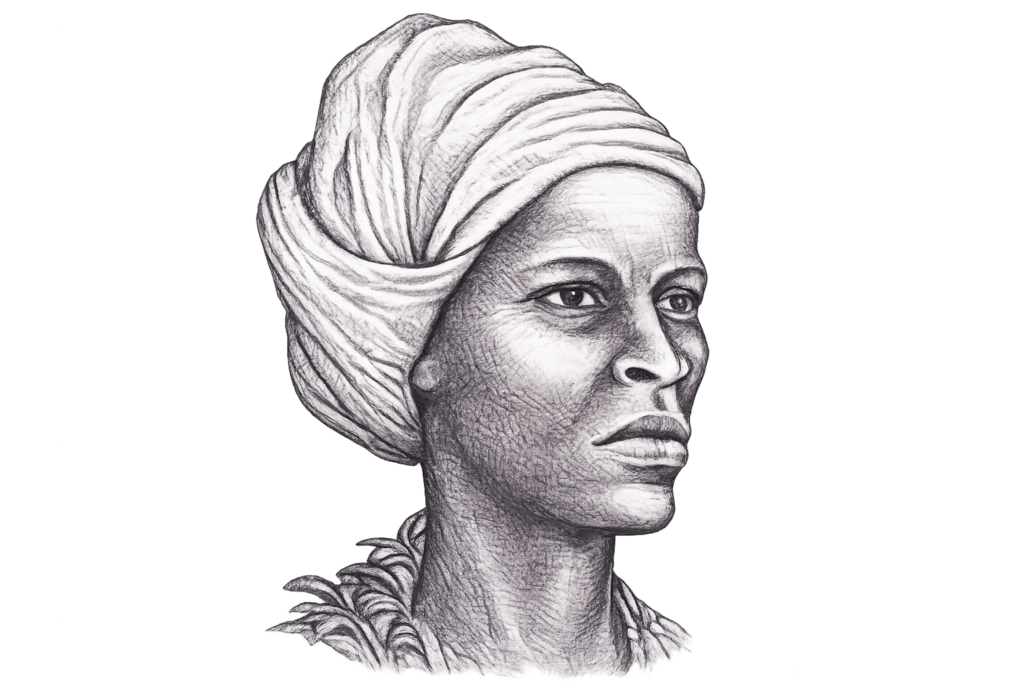
ca. 1686–1750 · Jamaica
Nanny of the Maroons is one of the most remarkable figures in the history of the Caribbean. She was the leader of the Windward Maroons — a community of escaped enslaved people who had retreated deep into the Blue Mountains of Jamaica and built a free existence there, far beyond the reach of British colonial power. Nanny was respected not only as a military commander but also as a spiritual and religious authority within her community.
Her military tactics were far ahead of their time. She organised guerrilla warfare in the rugged mountain terrain, where the Maroons repeatedly lured British troops into ambushes using their intimate knowledge of the landscape — knowledge the colonisers simply did not possess. Her reputation was such that the British feared her, and they were ultimately compelled to sign a peace treaty in 1739 that officially guaranteed the Maroons their freedom and their own land. It was a rare victory of the oppressed over the colonial system.
Nanny is also described as an Obeah woman — a spiritual tradition rooted in West Africa — and her powers were experienced by her people as supernatural. Her ability to catch bullets with her body is among the legends that surround her. Whether literally true or not, it speaks to how fully she lived as a myth within her own lifetime.
Today her portrait appears on the Jamaican five-hundred-dollar banknote. She is the only woman among Jamaica’s seven national heroes — a recognition long overdue but now indisputable. Her legacy continues to inspire the island’s people to this day.
Malcolm X
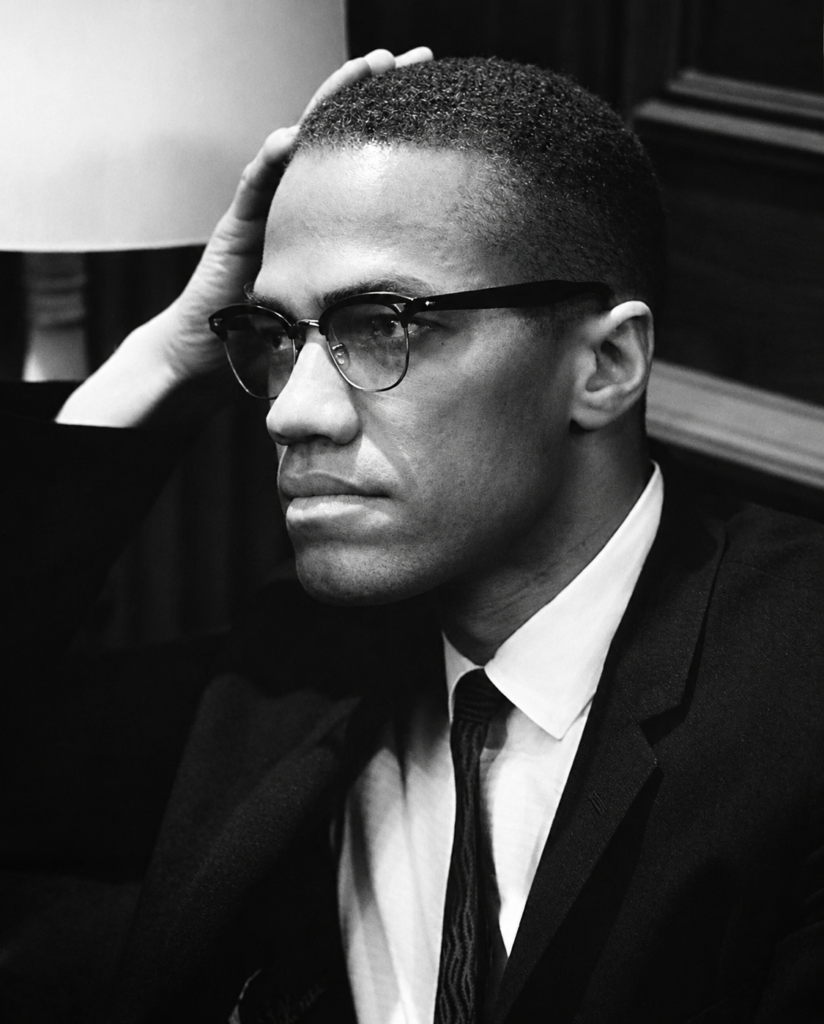
1925–1965 | US
Freedom — byny means necessary.
Malcolm Little grew up in poverty and violence. His father, a Baptist preacher and Garvey follower, was murdered when Malcolm was six years old — almost certainly by white supremacists. His mother was subsequently committed to a psychiatric institution. As a teenager he drifted into crime, and at twenty-one he was behind bars for burglary. In prison he found the Nation of Islam — and with it, a new life and a new name: Malcolm X.
As a spokesman for the Nation of Islam he spoke with unprecedented directness about the structural causes of Black poverty and oppression in America. While Martin Luther King advocated for nonviolent integration, Malcolm X argued that self-defence was a right — and that integration into a corrupt system was not liberation. His rhetoric was razor-sharp, his analysis penetrating, his reach extraordinary.
In 1964 he broke with the Nation of Islam following revelations about the immoral conduct of leader Elijah Muhammad. His pilgrimage to Mecca transformed him once more: he witnessed Muslims of every skin colour living together in peace, and began to believe that racial harmony was possible — but only on the basis of genuine equality, not white charity.
On 21 February 1965 he was shot and killed during a speech in New York. He was 39 years old. His autobiography, recorded by Alex Haley, remains one of the most important Afro-American texts ever written. He laid the intellectual foundation for the Black Power movement and gave language to the analysis of structural racism that continues to shape public discourse today.
Dr. Kwame Nkrumah
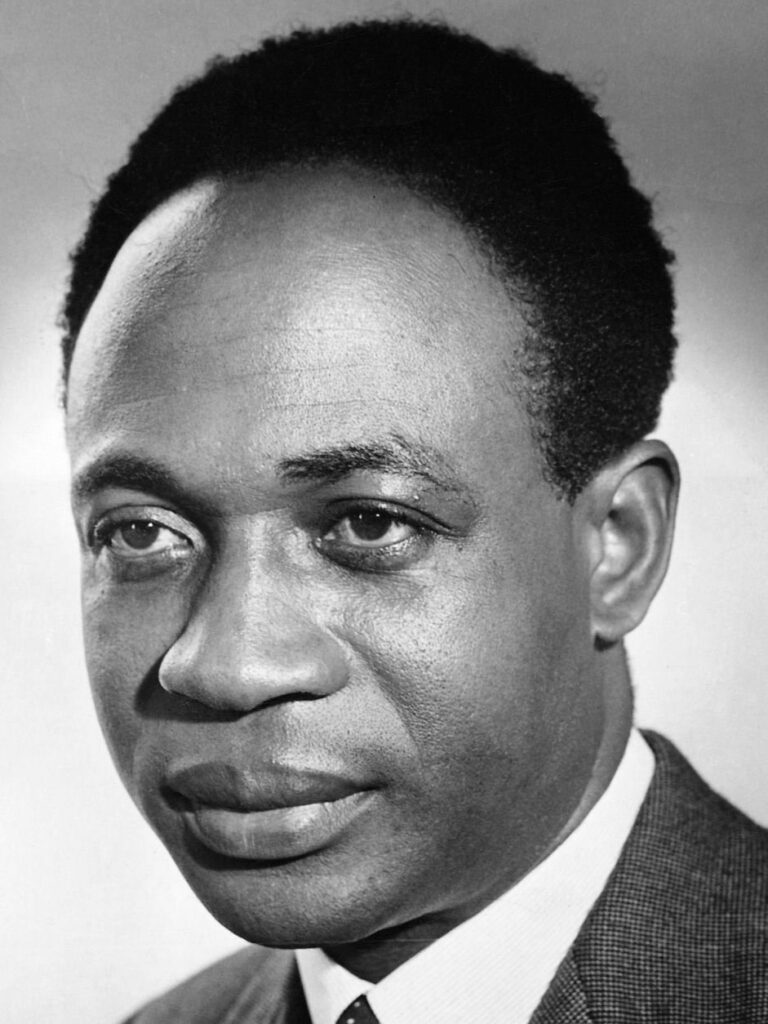
1909–1972 · Ghana
Seek ye first the political kingdom, and all things shall be added unto you.
Kwame Nkrumah was born in a small village in the Gold Coast — the British colony he would transform into the independent nation of Ghana. He studied philosophy and theology in America, where he was deeply influenced by the Pan-African tradition of W.E.B. Du Bois and Marcus Garvey. In England he befriended George Padmore, who became his ideological compass. Returning to Africa, he organised mass popular movements that in 1957 led to Ghana’s independence — the first sub-Saharan African country to break the colonial chain.
As president, Nkrumah set the tone for a new Africa. He nationalised key industries, built the Akosombo Dam, invested heavily in education and made Ghana a magnet for Pan-African intellectuals and activists from across the diaspora — from W.E.B. Du Bois to George Padmore himself. His book “Africa Must Unite” laid the theoretical groundwork for what would later become the African Union.
But his authoritarian tendencies and the failure of some economic projects made him vulnerable. In 1966, while on a state visit to Hanoi, the military staged a coup. Nkrumah fled to Guinea, where President Sékou Touré received him as a fellow head of state in exile. He died in 1972 in Romania, where he had gone seeking medical treatment.
His legacy is undeniable. Ghana commemorates him as its greatest national hero. His thinking on African unity, economic sovereignty and decolonisation is more relevant than ever in a continent still reckoning with the long aftermath of colonialism.
George E. Ferguson
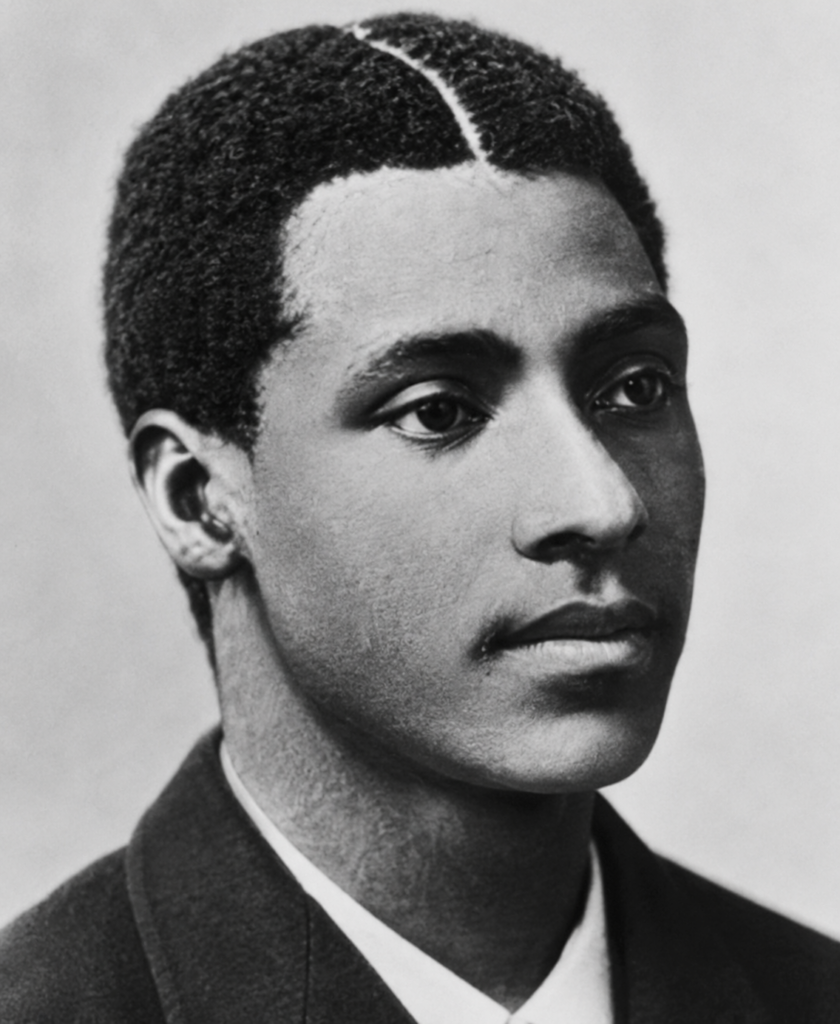
1864–1897 | Ghana (Gold Coast)
George Ekem Ferguson was born in 1864 as a member of the Fante people on the Ghanaian coast. At a time when European colonial powers were tightening their grip on Africa, Ferguson used his exceptional intelligence and education to penetrate the heart of the British colonial system — serving simultaneously as cartographer, diplomat and political analyst.
Ferguson travelled into the northern Gold Coast — territory that was at the time barely mapped — and negotiated treaties on behalf of the British Crown with dozens of local rulers. These agreements established the boundaries of what would later become Ghana. His precise maps were for decades the finest available documentation of the West African interior. At the same time he recorded the languages, cultures and political structures of the peoples he encountered — work of immeasurable scholarly value.
But Ferguson was more than an instrument of colonial administration. His dispatches reveal a man who genuinely believed he could protect the interests of African peoples within the colonial framework — by codifying their sovereignty in treaties the British were legally obliged to honour. It was a naive belief, perhaps, but also a strategic choice made by someone with few other options.
In 1897 he was killed by forces loyal to Samori Touré — a Malinese warlord building his own empire in West Africa. Ferguson was only 33 years old. For decades he remained a forgotten figure. Today he is remembered in Ghana as an early patriotic and intellectual icon — a man who gave his life in service of his country’s unification.
George Padmore
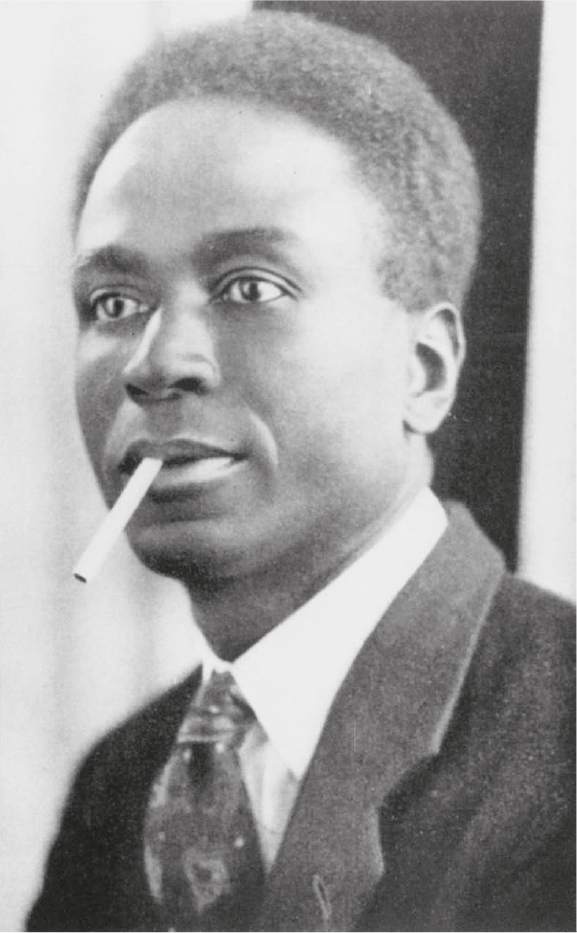
1903–1959 · Trinidad & Ghana
George Padmore, born Malcolm Ivan Meredith Nurse in Trinidad, was one of the most influential yet least celebrated figures in the history of African liberation. As a young man he travelled to America, where he joined the Communist Party and became one of the most active Black communist organisers of his generation. He worked closely with the Communist International in Moscow, travelling the world to support anti-colonial movements.
But in 1933 he broke with Moscow — a decision that fundamentally altered the course of his life. Padmore had concluded that the Soviet Union was willing to sacrifice the interests of African and Caribbean peoples to serve larger geopolitical ambitions. He developed his own political philosophy: Pan-Africanism as the path to liberation — a third way that was neither capitalist nor communist, but rooted in the historical and cultural reality of Africa itself.
From London he became the ideological hub of the international Pan-African movement. In 1945 he organised the historic 5th Pan-African Congress in Manchester — a congress that brought together an entire generation of African leaders, including Kwame Nkrumah and Jomo Kenyatta. The congress is widely regarded as the starting pistol for the wave of African decolonisation that swept through the 1950s and 1960s.
Nkrumah invited him to independent Ghana in 1957 as his adviser on African affairs. Padmore died just two years later, in 1959, and never witnessed the full flowering of the independence movements he had spent his life igniting. His book “Pan-Africanism or Communism?” remains a classic work of African political theory.
Marcus M. Garvey Jr.
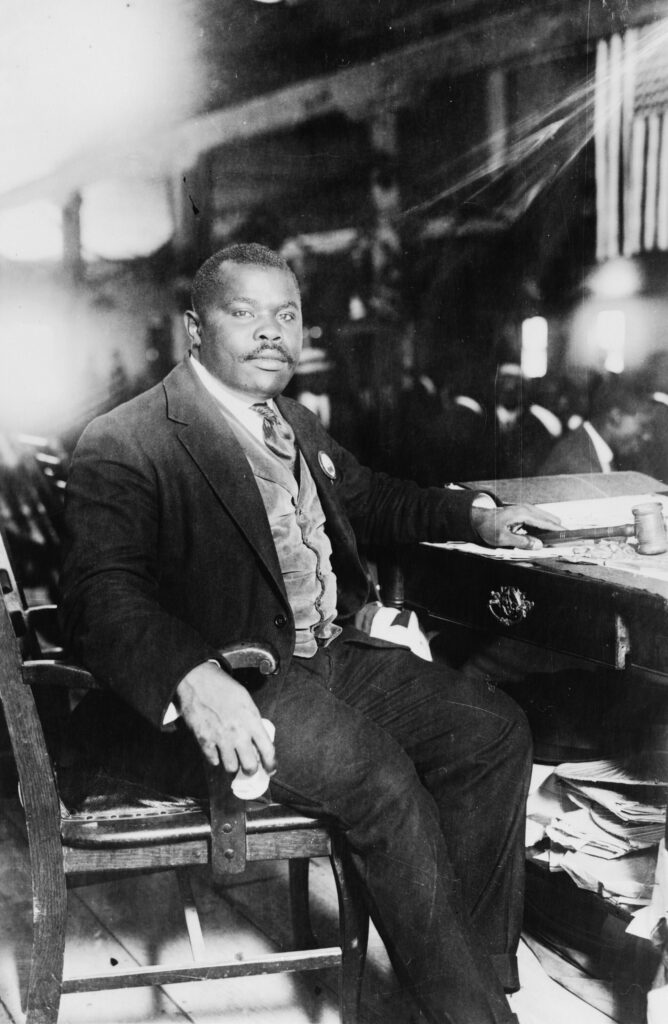
1887–1940 | Jamaica & US
Africa for the Africans — those at home and those abroad.
Marcus Mosiah Garvey grew up in Saint Ann’s Bay, Jamaica, the son of a blacksmith. From an early age he developed a sharp awareness of the racial inequalities that pervaded the Caribbean and the African diaspora. After travelling through Central America and Europe, witnessing the same patterns of oppression everywhere he went, he returned to Jamaica with a clear mission: to build a worldwide movement that would reunite Black people with Africa.
In 1914 he founded the Universal Negro Improvement Association (UNIA). After relocating to New York, the UNIA grew into the largest Black mass movement in history — with millions of members spread across dozens of countries. His newspaper, the Negro World, reached readers from Harlem to Lagos. His speeches drew tens of thousands. He sold a dream: a strong, independent Africa where Black people could live with dignity on their own terms.
To realise it, he founded the Black Star Line — a shipping company intended to carry Black people back to Africa. The venture collapsed financially, partly due to deliberate sabotage by the American government, which regarded Garvey as a dangerous radical. In 1923 he was convicted of mail fraud — a charge widely seen as politically motivated. He was deported to Jamaica and died in London in 1940.
But his legacy has outlasted him many times over. The Rastafari movement reveres him as a prophet. Malcolm X was raised on his ideas through his father. And the Black Star Line lent its name to the symbol on the flag of Ghana — the star of African unity.
Nathaniel Turner
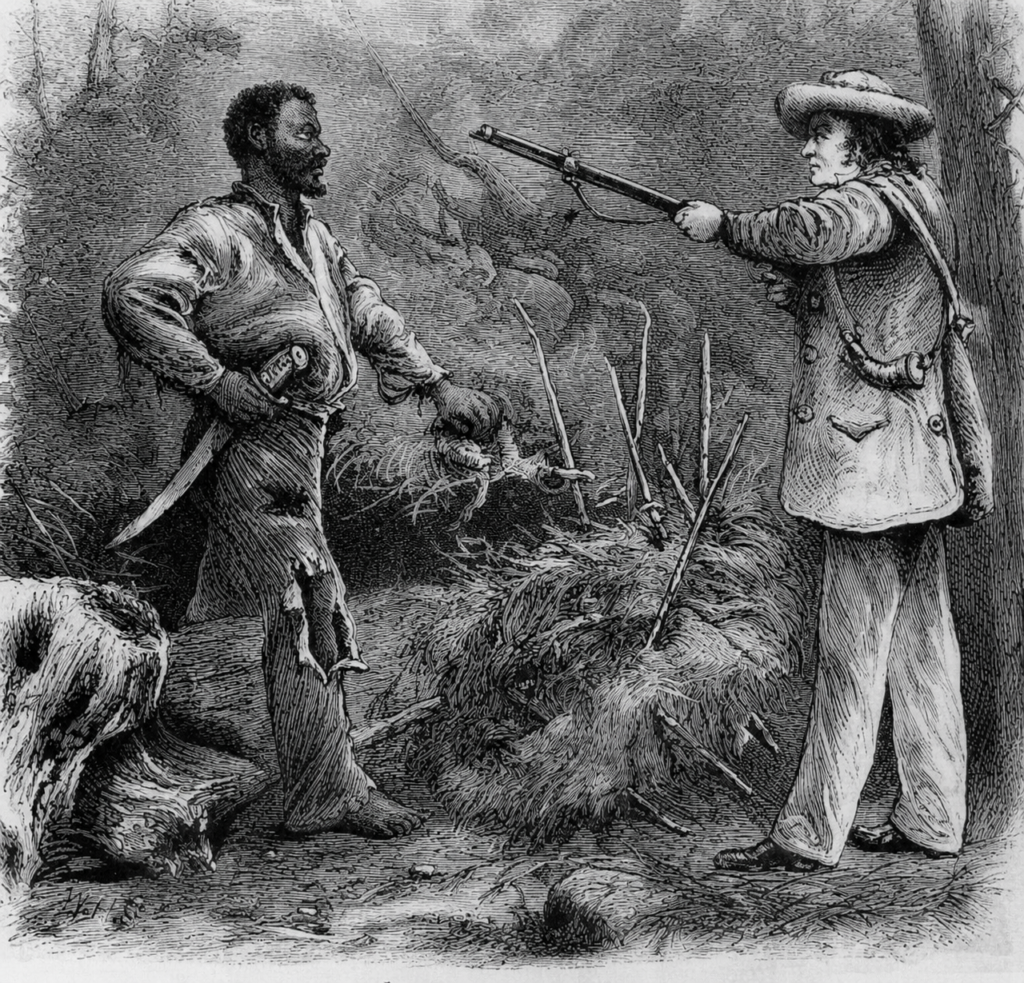
1800–1831 ·| Virginia, US
Nat Turner was born on a tobacco plantation in Southampton County, Virginia. From an early age he was considered extraordinarily intelligent — he taught himself to read and write, a rare achievement for an enslaved person. He became a Baptist preacher, respected by both Black and white people on the plantation. But beneath that surface smouldered a conviction: that God had chosen him to liberate his people.
In the night of 21 August 1831, Turner struck. With a small group of initially seven men — which grew to more than seventy as the night progressed — he moved from plantation to plantation, killing slaveholders and their families. More than fifty white people died in what became the deadliest slave rebellion in American history.
Turner evaded capture for two months, while panic spread across the South. White militias, gripped by fear, murdered hundreds of innocent Black people in reprisal. Turner was eventually captured, tried and hanged on 11 November 1831. His body was mutilated as a warning to others.
The aftermath intensified repression enormously: new laws prohibited enslaved people from learning to read or preach. But Turner’s rebellion proved something undeniable: enslaved people were not willing victims, but human beings with dignity, rage and the will to fight. His memory endures as a symbol of unbroken resistance.
Sojourner Truth
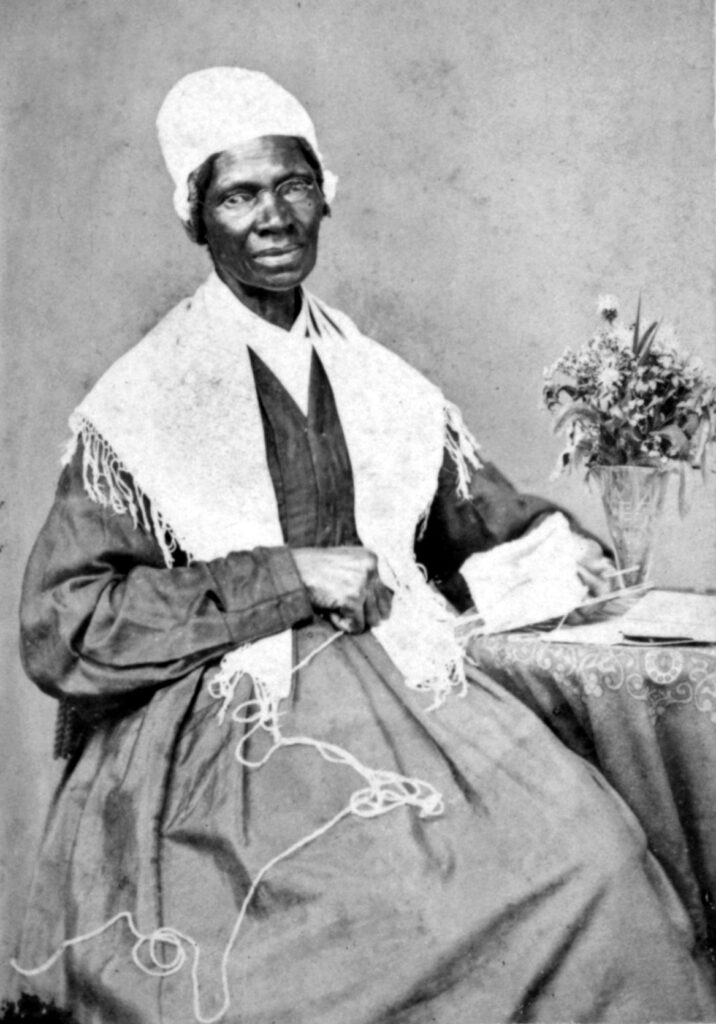
ca. 1797–1883 | US
Ain’t I a woman? —
Isabella Baumfree was born around 1797 as an enslaved person in Ulster County, New York. She was sold multiple times, separated from her children and subjected to the full brutality of enslaved life — even in the North, where slavery remained legal well into the nineteenth century. In 1826 she escaped with her youngest daughter, just before the legal abolition of slavery in New York took effect in 1827.
She renamed herself in 1843: no longer Isabella Baumfree, but Sojourner Truth — a travelling truth. She journeyed through the northern states, preaching on street corners and at public meetings, speaking about slavery, faith and the position of women with a directness that regularly left her audiences stunned. Her famous speech “Ain’t I a Woman?” — delivered in Akron, Ohio, in 1851 — confronted those present with the fact that Black women were simultaneously excluded from both the abolitionist and the feminist movements.
During the American Civil War she recruited Black soldiers for the Union Army and met President Abraham Lincoln at the White House. After the war she lobbied Congress for land redistribution for formerly enslaved people. She lost that fight, but never abandoned it.
Sojourner Truth died in 1883, at approximately eighty-six years of age, in Battle Creek, Michigan. She had known both the depths of enslavement and the heights of public life — and had wielded her voice in service of all who could not yet speak for themselves.
W.E.B. Du Bois
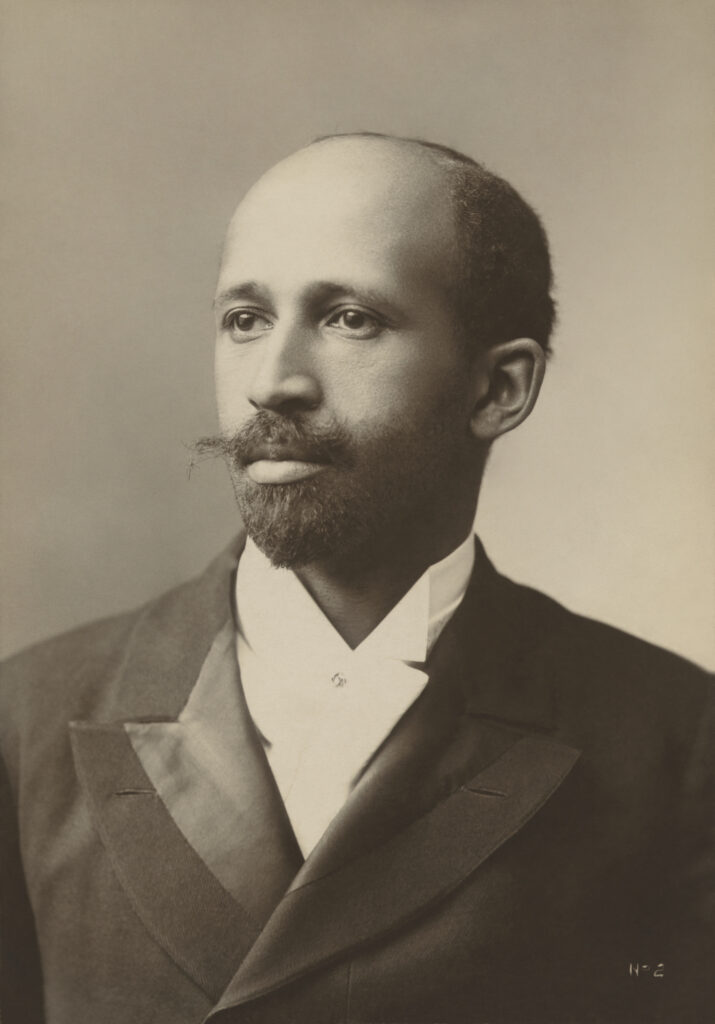
1868–1963 · US & Ghana
The problem of the twentieth century is the problem of the colour line.
William Edward Burghardt Du Bois was born in 1868 in Great Barrington, Massachusetts — one year after the abolition of slavery in America. As the first African American to earn a doctorate from Harvard University, he combined scholarly brilliance of the highest order with a lifelong political struggle. His doctoral dissertation on the African slave trade remains a landmark work in the field.
His book “The Souls of Black Folk” (1903) introduced the concept of “double consciousness”: the idea that African Americans always inhabit two identities simultaneously — never fully acknowledged in either. He rejected the accommodationist politics of Booker T. Washington and instead advocated for full civil rights, higher education and political participation.
In 1909 Du Bois was a co-founder of the NAACP and for years edited its influential magazine “The Crisis”. At the same time he organised a series of Pan-African Congresses throughout the 1910s and 1920s that helped lay the groundwork for African independence movements.
At the age of ninety-three he emigrated to Ghana at the invitation of Nkrumah, disillusioned by the persistent racial inequality in America. He died in Accra on 27 August 1963 — the evening before Martin Luther King delivered his “I Have a Dream” speech at the March on Washington. A life of ninety-five years, stretching from the first generation after slavery to the threshold of the modern civil rights movement.
Frederick Douglass
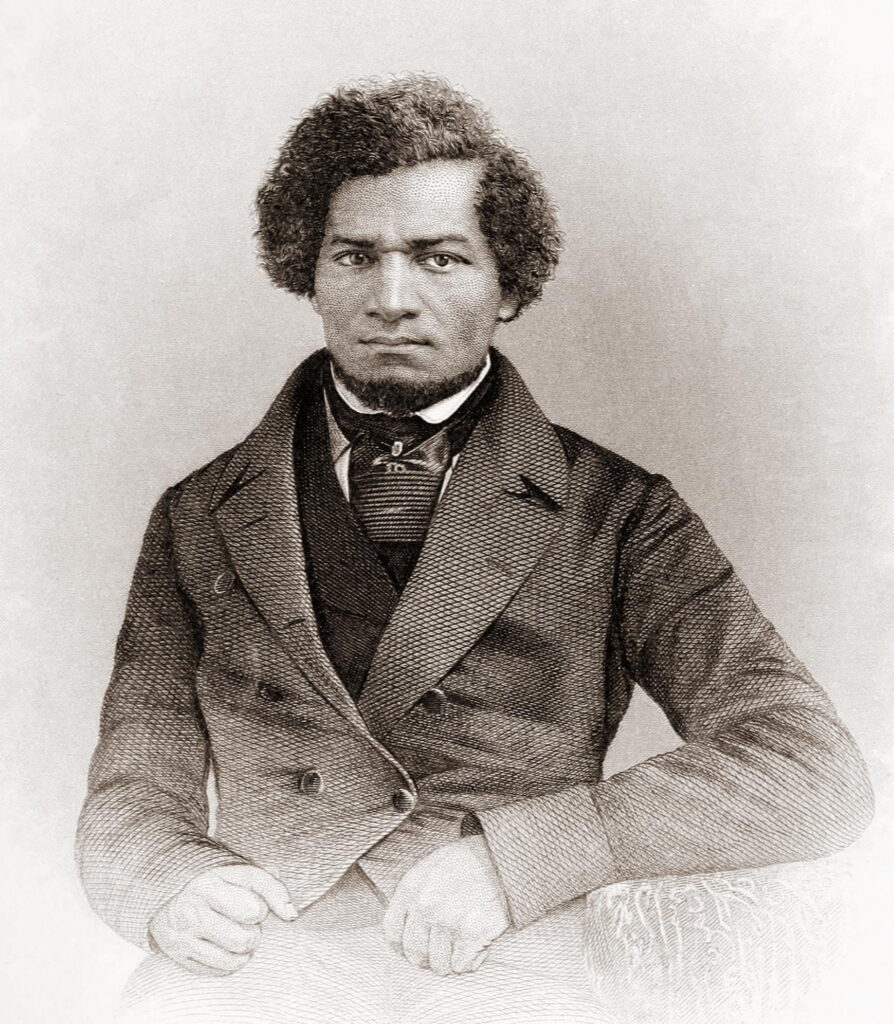
1818–1895 · US
If there is no struggle, there is no progress.
Frederick Douglass was born around 1818 on a plantation in Maryland, the child of an enslaved woman and — in all likelihood — his white slaveholder. His intelligence was apparent from the start: the wife of his owner began teaching him to read, until her husband forbade it. Douglass taught himself to continue in secret, and began holding covert literacy classes for other enslaved people — a quiet act of revolution.
In 1838 he escaped to the North, disguised as a sailor. Once free, he began speaking at abolitionist meetings — and his eloquence was so formidable that audiences refused to believe he had ever been enslaved. His autobiography, “Narrative of the Life of Frederick Douglass” (1845), shocked the American public with its clear-eyed account of life under slavery. To avoid arrest as a fugitive slave, he travelled to England, where supporters raised money to purchase his freedom officially.
Back in America, he published his own newspaper, “The North Star”, and became one of President Lincoln’s closest informal advisers. He successfully lobbied for the arming of Black soldiers during the Civil War. After the war he continued fighting: for civil rights, women’s suffrage, against lynching, and for the economic uplift of formerly enslaved people.
Douglass died in 1895, on the very day he returned from a women’s suffrage meeting. Until the end he was in motion. His life spans the full arc of the African American experience — from slavery to senators and presidents who sought his counsel.
Martin Luther King Jr.
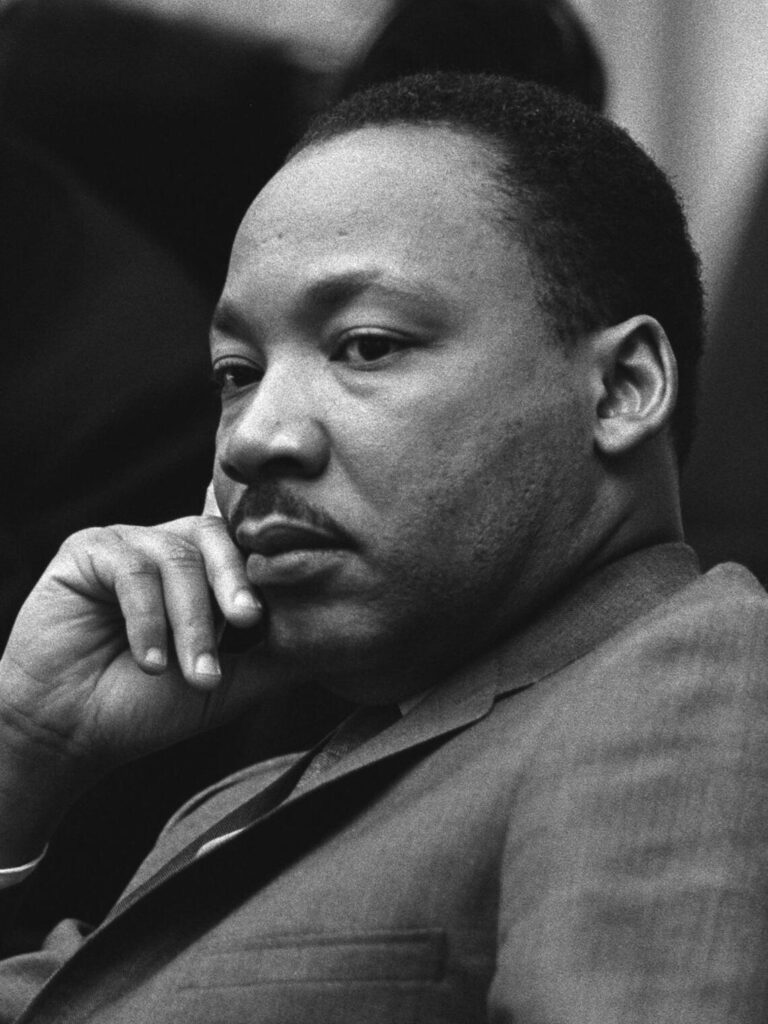
1929–1968 | US
I have a dream
Martin Luther King Jr. was born in Atlanta, Georgia, the son and grandson of Baptist preachers. He studied theology at Morehouse College and earned his doctorate at Boston University. At twenty-five he became pastor in Montgomery, Alabama — and was almost immediately pulled into history when Rosa Parks refused to give up her bus seat in December 1955.
King led the Montgomery Bus Boycott, which lasted 381 days and ended with the desegregation of the city’s public transport. His nonviolent approach, inspired by Mahatma Gandhi, allowed him to build a broad moral coalition that reached even white moderate Americans who might otherwise have looked away.
The March on Washington in August 1963 brought more than 250,000 people to the Lincoln Memorial. In 1964 he received the Nobel Peace Prize — at thirty-five, the youngest laureate at the time. That same year the Civil Rights Act was signed into law. The Voting Rights Act followed in 1965.
In his final years King turned his attention toward poverty and publicly opposed the Vietnam War, estranging allies who preferred a narrower movement. On 4 April 1968 he was shot on the balcony of the Lorraine Motel in Memphis. He was 39. Cities across America erupted in fire. He remains the measure against which every generation tests its own courage.
Harriet Tubman
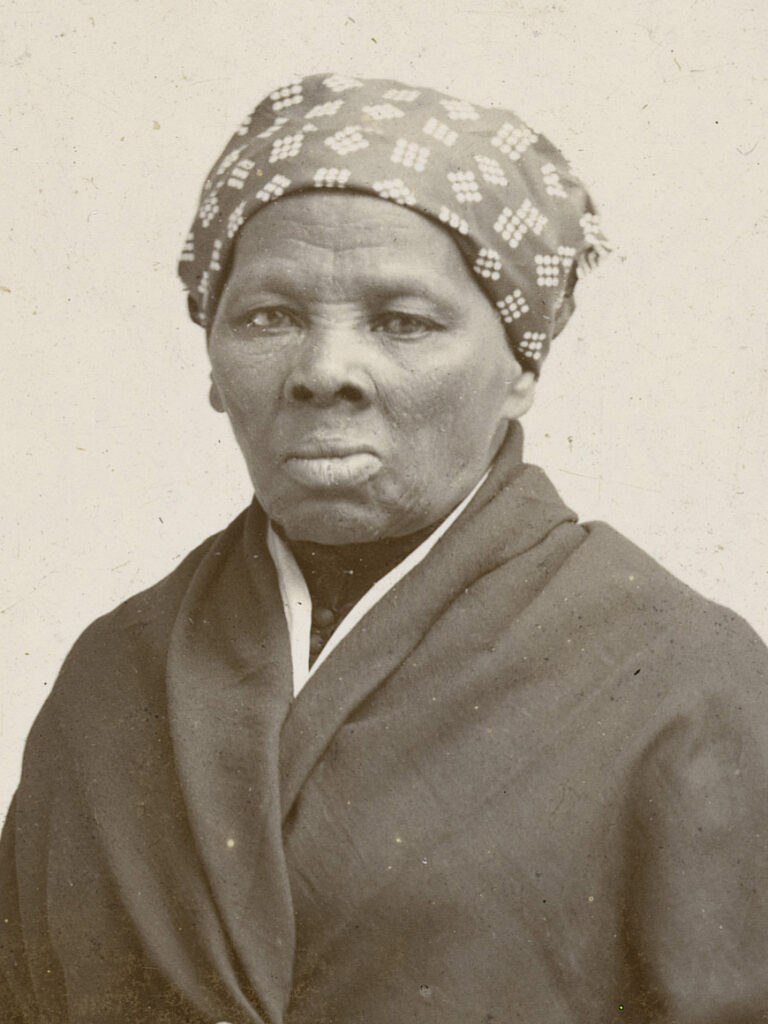
ca. 1822–1913 · US
I never ran my train off the track and I never lost a passenger.
Harriet Tubman was born Araminta Ross on a plantation in Dorchester County, Maryland. As a young girl she was struck by a heavy iron weight hurled by an enraged overseer — meant for another enslaved person but hitting her instead. She suffered the effects for the rest of her life: sudden attacks of narcolepsy, during which she could lose consciousness without warning. And yet she became the most feared conductor of the Underground Railroad.
In 1849 she escaped herself, making her way to Philadelphia. But she returned — thirteen times. Each time she travelled by night, navigating by the stars, using trusted contacts and codes hidden within gospel songs. She liberated nearly seventy people, including her parents, brothers and sisters. Slaveholders placed a bounty on her head of forty thousand dollars. She was never caught.
During the American Civil War she served the Union Army as a spy, scout and nurse. In 1863 she led the Combahee River Raid — a military operation that freed more than seven hundred enslaved people. It was the first armed military action in American history led by a woman.
After the war she supported the women’s suffrage movement and founded a home for elderly African Americans in Auburn, New York. She died in 1913, surrounded by friends, with the words: “I go to prepare a place for you.” In 2016 the American government announced that her portrait would appear on the twenty-dollar bill — a decision that remains, as of today, unfinished business.
The stories connected to this river live on through generations of resistance and liberation — from Nat Turner and Harriet Tubman to Frederick Douglass, Marcus Garvey, W.E.B. Du Bois, Malcolm X, Martin Luther King Jr., George Padmore, Kwame Nkrumah, and countless others who transformed inherited pain into global movements for freedom, dignity, Pan-Africanism, and justice.
To stand beside the Slave River is to understand that the story of slavery did not end at the coast. It continued across oceans, across centuries, and across generations — shaping the modern world and the ongoing struggle for identity and liberation.
Today, Assin Manso remains one of Ghana’s most important heritage sites and an essential destination for anyone seeking to understand the human reality of the transatlantic slave trade.
Visiting Information
Location
Central Region, Ghana — approximately 40 km north of Cape Coast.
Important Sites
- Donkor Nsuo (“Last Bath” Slave River)
- Ancestral Graveyard
- Memorial Wall of Return